

1Sleep
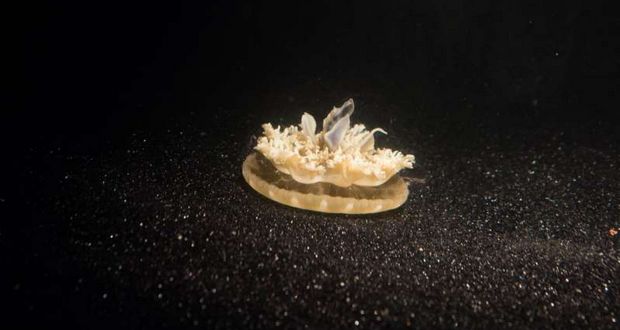
Even animals like jellyfish that lack brains need to snooze. Biologists have discovered that like people, jellyfish hit the hay and have the same trouble we do waking up. Because these creatures are very low on the animal family tree, the work suggests that the ability to sleep evolved quite early.
2. Poisonous food substances are the reason we find the bitter taste unpleasant. Our taste buds evolved associating bitter taste to poison because most of the poisonous wild fruits are bitter and nutritious ones, sweet. The feature which protected us for centuries is now causing major health-risks.
3. Shyness may be an evolutionary adaptation. The braver animals may find more mates and eat more food whereas the shyer individuals, hiding on the sidelines, might avoid the attack.
4. Fainting at the sight of blood may have evolved to help us “play dead” when attacked.
5. Most Greenland sharks are blind due to a 3cm long parasite that latches onto their eye. The sharks have not evolved a defense because the parasite is bioluminescent and is theorized to attract prey to the shark’s head.
Latest FactRepublic Video:
15 Most Controversial & Costly Blunders in History
6Chimps and Humans
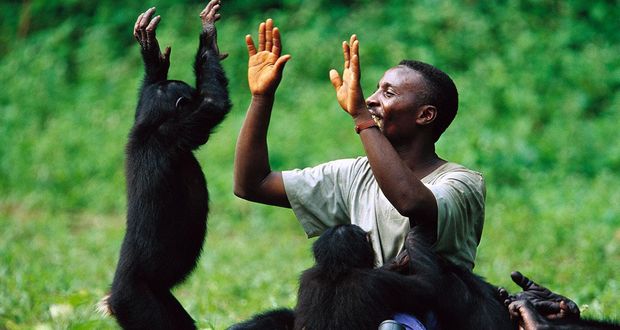
After 6.5 million years of separate evolution, the differences between chimpanzees and humans are ten times less than those between rats and mice.
7. Some rattlesnakes have now evolved not to rattle. Previously, they rattled to avoid being stepped on by hoofed animals. Now they’ve learned to remain hidden and quiet as to avoid being hunted by humans.
8. Chili peppers evolved to be spicy because heat repels most animals except for birds, which are responsible for spreading their seeds.
9. Female ducks have evolved a complex vagina with several dead-end pockets and tunnels in order to confuse unwanted mates and prevent fertilization from the wrong male.
10. The crab-like form is so effective that at least five groups of crustaceans have independently evolved into that shape, in a process called carcinisation.
11Small Tusked Elephants

Elephants are all evolving smaller tusks due to selection pressure put against the large tusked males by ivory poachers, which allows small tusked males to produce more calves.
12. Sperm whales only have one blowhole which evolved from the left nostril. The right nostril is located inside the front of the whale’s head and has evolved into a pair of lips used for echolocation.
13. A study found that narrow nostrils evolved in humans living in colder climates so as to warm the air before it hit their lungs.
14. Rye and oats used to be considered weeds in wheat fields. Because they would get weeded out if they didn't look like wheat, they also evolved to have large seeds. Eventually, their hardiness compared to wheat meant they were grown as food in colder climates.
15. Two species of vultures (New World and Old World) evolved completely separately from each other on different continents, suggesting that vultures have a huge and essential ecological value in nature.
16Monster under the Bed

The theory of “monster under the bed” is an evolutionary leftover from our hunter/gatherer days. In the human past, children would fear bedtime because of the threat of wild animals.
17. The avocado evolved to appeal to extinct megafauna (e.g. the giant armadillo) in order to facilitate seed dispersal via ingestion and excretion. This is why the avocado has such a sizeable seed.
18. People on the Solomon Islands have a gene that causes blonde hair, despite their dark skin. This gene is unrelated to the one that causes blondeness in European peoples and evolved independently.
19. Rosacea is a skin disease that is found mainly in those of Northern European descent and it is also known as The Curse of the Celts. In reality, it is actually an evolutionary adaptation acquired by ancestral Celtic people to fend off bacteria during seasonal periods of low ultraviolet levels.
20. A species of cavefish in Thailand has been documented walking and climbing waterfalls in a manner similar to four-footed creatures such as salamanders, in a find researchers call “huge” in evolutionary terms.
21Snails
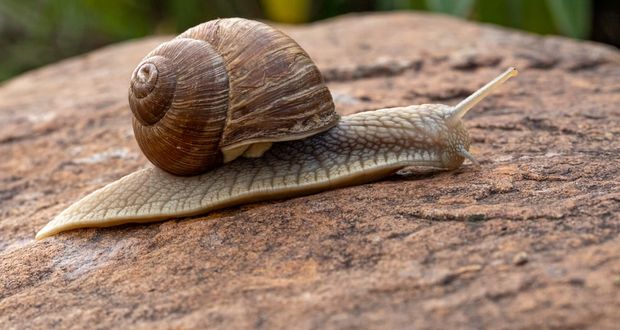
Exposure to platinum can turn snails into their evolutionary decedents, the slug.
22. We see the colors that we do because that is just about the only spectrum of light that passes through water, the area where our eyes first evolved. There hasn’t been any evolutionary reason on land to see any broader spectrum.
23. Photosynthesis is most likely so efficient because plants evolved to use quantum mechanics, like superposition, to aid efficient energy transfer. These are the same concepts we are struggling to utilize to make better computers today.
24. The Plantaris is a small muscle in our calves that is believed to have been used by our ancestors to grip with their feet. It is so weak that it is considered functionally obsolete and arguments have been made that humans are evolving it out. It is absent in 7-10% of the population worldwide.
25. Studies have found that women are better at discerning shades of colors, while men are better at tracking fast-moving objects and discerning detail from a distance. These evolutionary details are linked to a hunter-gatherer past.


