

1Sociable weavers

There are birds called "sociable weavers" who construct nests which can weigh 2,000 pounds, measure 20 feet wide, and house up to 500 birds. Birds that shirk their duties on creating the nest’s main thatch structure, and focus instead on their individual chambers, are chased away from the nest.
2. Helicocranchia pfefferi a.k.a piglet squid is a funny looking squid that is about the size of a small avocado and can be found most commonly in the deepwater (greater than 100 meter or 320 feet) of virtually all oceans.
3. The laughing falcon is a bird that has a loud cry that sounds like happy/sad/crazy laughter, and it specializes in eating snakes.
4. Prairie dogs have such a complex means of communication that they can embed descriptions of predators within their calls, and even have a specific call to describe a man with a gun.
5. Southern viscacha is a species of viscacha, a rodent which is found in Argentina, Bolivia, Chile, and Peru. It is a colonial animal living in small groups in rocky mountain areas. They do not venture far from rocks so that they can plunge underground if danger threatens.
Latest FactRepublic Video:
15 Most Controversial & Costly Blunders in History
6Pangolins
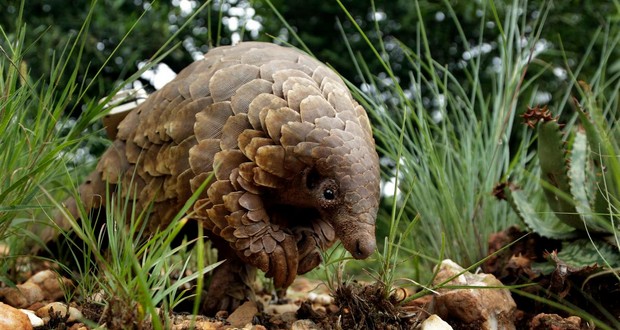
Pangolins have soft, pale scales when born, which begin to harden by the second day. They are the only mammal with scales and it’s also the most illegally traded wild mammal on the planet, and is in danger of being eaten to extinction.
7. The shoebill is noted for its slow movements and tendency to stay still for long periods, resulting in descriptions of the species as "statue-like."
8. Huskies have a lot of special adaptations for dealing with cold weather. For instance, when they sleep, they put their tails over their noses. The tails are specially adapted to act as warm air filters so the dog only breathes warm air.
9. Japanese macaque wash their food in saltwater before they eat in order to both clean it and enhance the taste. They also make snowballs for fun.
10. Luzon bleeding-heart is a species of a ground dove which has a reddish hue extending down the belly, furthering the illusion of blood having run down the bird's breast. They are shy and secretive, and very quiet, and rarely leave the ground except when nesting.
11Stoats
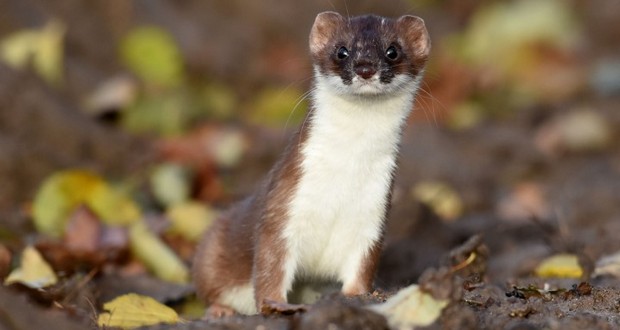
Some stoats (also known as weasels) turn completely white in winter - except for the tip of their tail, which remains black. Their name is thought to have derived from the Dutch word for "naughty."
12. Bushbabies pee on their hands to have more traction on branches and to be able to find their way back to their nests.
13. The black heron uses a hunting method called canopy feeding. It uses its wings like an umbrella, creating shade that attracts fish.
14. Slow lorises are the only known venomous primates. The venom comes from brachial glands on their forearms and from their saliva. When threatened, the slow loris will lick the brachial patch prior to biting the aggressor.
15. Ducklings have abstract thoughts. Within hours of hatching, these baby birds can learn concepts like “same” or “different” — and they do so faster than human infants.
16Boxer Crabs

Boxer or Pom-Pom Crabs carry around live anemones in each claw to protect them from predators. When a pom-pom crab lacks sea anemones, it steals one from another crab and splits it into two fragments that regenerate into identical clones of the original anemone.
17. Harvest Mice like crawling into flowers to eat the pollen and sometimes even fall asleep in them.
18. Red-lipped batfish is actually a pretty bad swimmer, so it uses its highly adapted pectoral fins that are large enough to help it walk across the ocean floor.
19. The bearded vulture is the only known animal whose diet is almost exclusively bone. In fact, it usually disdains the actual meat and lives on a diet that is typically 85–90% bone marrow.
20. The Hammer-headed bat, the largest bat in Africa has been observed attacking live chickens. With a lifespan of over 30 years, it is also a carrier of the Ebola virus.
21Ring-tailed lemurs

In the mornings the ring-tailed lemurs' sunbath to warm themselves. They face the sun sitting in what is frequently described as a "sun-worshipping" posture or lotus position.
22. An orchid mantis uses an aggressive 'flowerlike' mimic that attracts pollinators as prey items.
23. The Honey Possum is the only non-flying animal in the world to live solely on a diet of nectar and pollen. Whilst their young are born weighing only 0.005 grams, honey Possum males have the largest sperm of any mammal in the world (0.36 mm).
24. Like many fruit-eating pigeons, the Pink-necked green pigeon is thought to be an important disperser of fruit seeds in forests and woodlands and is thought to be one of those responsible for helping the return of many of the Ficus species to the islands of Krakatoa.
25. Sand cats are extremely difficult to study in the wild. Their furry soles prevent them from sinking in soft sand which makes their footprints nearly invisible. They have learned to crouch low and close their eyes when a light is shown on them, preventing any reflection off of their eyes.


