


1Ramon Llull
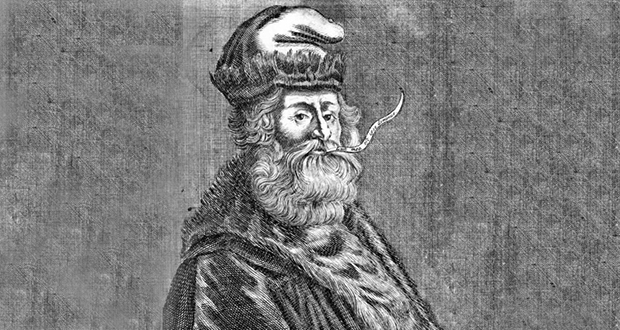
Mathematician Ramon Llull, who discovered ether in 1275, became a Franciscan monk after trying to write a dirty poem three times and seeing a vision of Christ each time.
2Robert Grosseteste

In his 1225 essay on the nature of color (Du Luce/On Light), the English Bishop Robert Grosseteste described the birth of the Universe in an explosion and the crystallization of matter to form stars and planets in a set of nested spheres around Earth. This was seven centuries before the Big Bang theory was put forth.
3Gaspard de Stérimberg

In 1224, the Knight Gaspard de Stérimberg returned from battle wounded, and with permission from the Queen of France, he built a hillside sanctuary for his recovery, dubbed Hermitage Hill. Today, that hill is where Hermitage wine is produced.
4Subotai
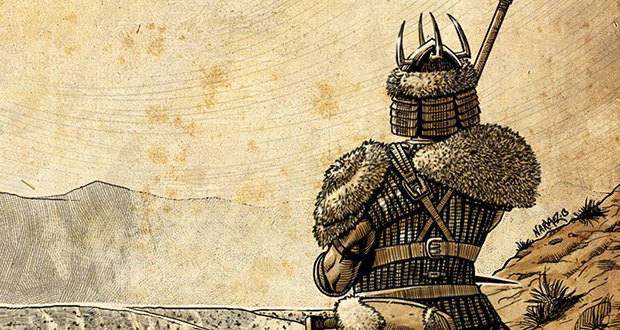
In 1241, a Mongol general named Subotai destroyed the armies of Hungary and Poland within two days of each other, with forces over five hundred kilometers apart.
5Najabuddin Unhammad
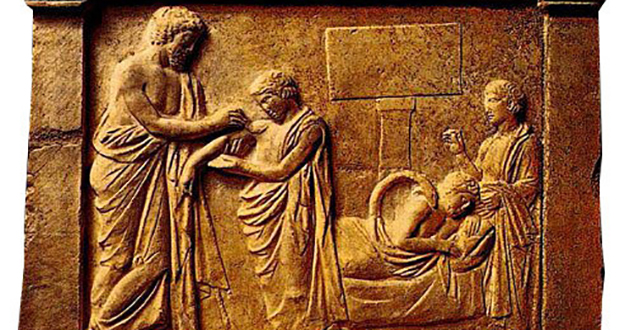
In 1222 A.D., a physician named Najabuddin Unhammad described the delusion of love as one of the seven mental disorders.
6Voivode Dmytro

During the sack of Kyiv in 1240 by the Mongols, only two thousand of the city's fifty thousand residents survived, and only six of an original forty buildings were left standing, however, Voivode Dmytro, the commander in charge of the city's defenses was shown mercy because of his bravery.
7Battle of Kalka River

The Mongol hordes, in 1223, executed the recently conquered Kievan nobles using the traditional caveat reserved for nobility: without shedding blood. They were buried and suffocated under the Mongol general's victory platform at the victory feast.
Latest FactRepublic Video:
15 Most Controversial & Costly Blunders in History
8Anders Sunesen

According to legend, the Danes were losing the 1219 Battle of Lyndanisse to the Estonians until an archbishop (Anders Sunesen) prayed and stretched his hands upwards. The Danes won the battle after down from the sky fell a Danish flag.
9Leaning Tower of Pisa

In 1280, Pisa was hit by a series of earthquakes that were believed to threaten the tower; however, it remained upright. Researchers later discovered that the soil (the cause of its lean) also protected from the quakes, absorbing the shock of the tremors.
104th crusade

The 4th crusade from 1202-1204 A.D., was commissioned to take back Jerusalem from Muslim control, and take down the Egyptian Sultanate, but all they were able to achieve was sacking Christian controlled Constantinople, and getting excommunicated.


